
Send Email info@xinhuatextile.com
Need Any Help?+86 -13805995216
Send Email info@xinhuatextile.com
Need Any Help?+86 -13805995216
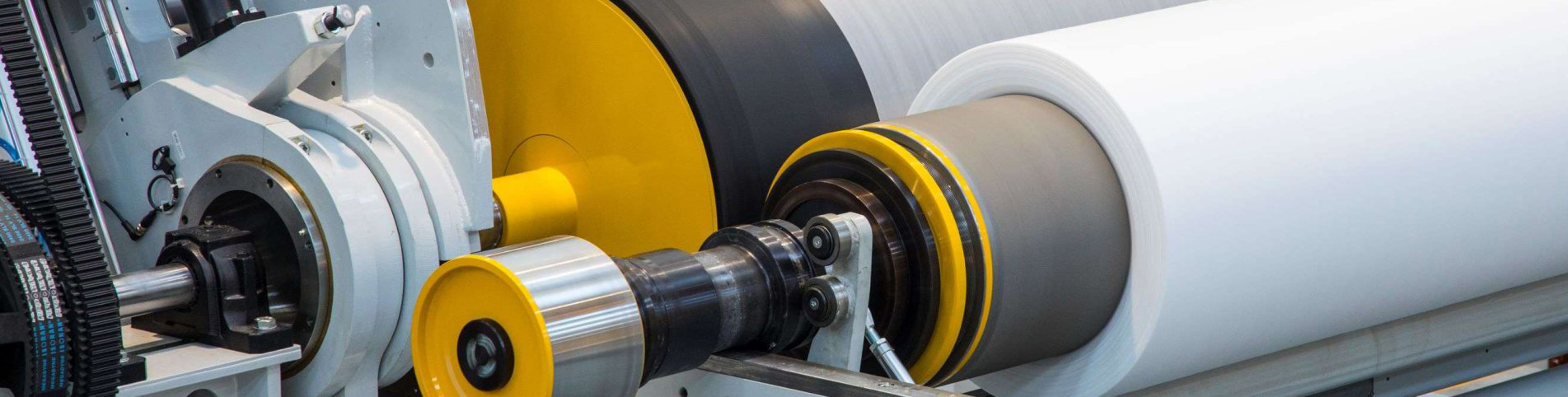
As professional manufacturers, we frequently receive inquiries from clients asking: "How exactly is nonwoven fabric transformed from plastic granules?" Today, we invite you to step into our production facility as we unveil this complete manufacturing process—from the raw Polypropylene (PP) material all the way to the final nonwoven fabric product.
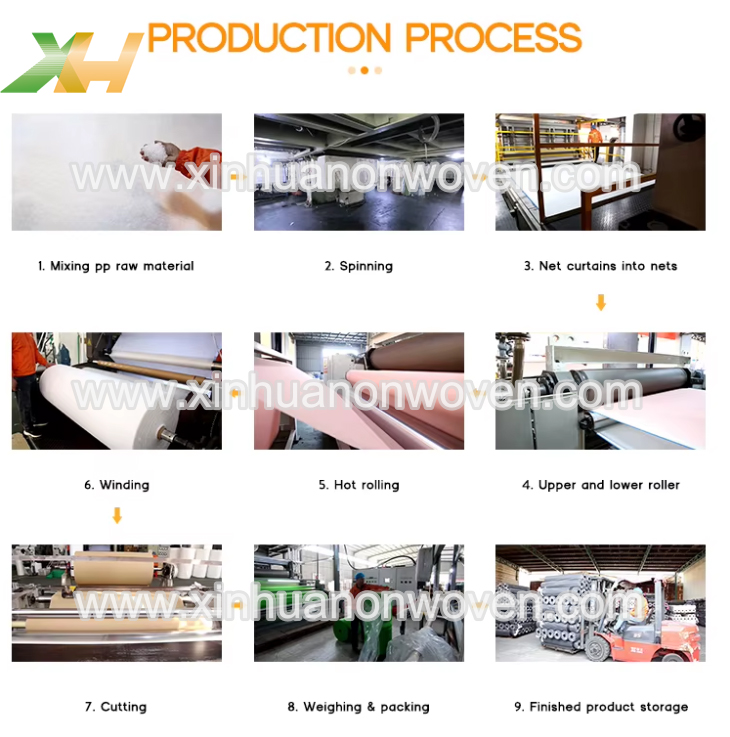
I. Selection of Raw Materials
It all begins with PP granules—a high-purity, non-toxic thermoplastic resin.
Material Selection Criteria: We select specific grades of PP raw materials characterized by high fluidity and a narrow molecular weight distribution, making them the ideal choice for the spinning process.
Auxiliary Additives: We incorporate various masterbatches in precise proportions, including color masterbatches, anti-aging agents, flame retardants (or hydrophilic/hydrophobic agents), as well as calcium carbonate filler masterbatches.
Prior to entering production, these raw materials undergo drying and impurity removal processes to prevent the formation of air bubbles or filament breakage during subsequent processing stages.
II. Melting and Extrusion
The raw materials are conveyed into the extruder via a vacuum suction system.
Heating and Melting: Through the synergistic action of screw shearing and electric heating, the temperature within the barrel is gradually raised in stages to between 180°C and 250°C, causing the PP granules to melt and transform into a viscous fluid state.
Filtration and Metering: The molten polymer fluid passes through a filter to remove impurities, while a metering pump precisely controls its output flow rate.
III. Spinning and Forming
The molten polymer is distributed to the spinneret—a metal plate perforated with thousands of precision capillary holes.
Extrusion into Filaments: Under high pressure, the molten polymer is forced through these micro-pores, thereby forming nascent fiber filaments.
Side-Blowing Cooling: A stream of cooling air is directed rapidly at the fiber filaments, causing them to solidify quickly and form solid, continuous filaments; the velocity, humidity, and temperature of the airflow are precisely regulated to ensure precise control over the fiber's fineness and crystallinity. IV. Air-Jet Drawing
The fiber filaments subsequently enter a high-speed drawing unit—a critical stage within the entire manufacturing process.
Working Principle: Compressed air generates a supersonic airflow within this unit, subjecting each individual filament to high-speed stretching.
Process Effects: This process induces the orientation and crystallization of the molecular chains within the fibers, thereby reducing the filament diameter (fineness) to a range of 1.5 to 3.0 Denier. Simultaneously, the material's tensile strength, modulus, and toughness are significantly enhanced.
V. Fiber Spreading and Web Formation
The airflow conveys the filaments to a spreading device (such as a reciprocating oscillating unit), which disperses the fiber bundles and lays them down uniformly onto a moving web-forming conveyor belt.
Web Formation Method: By adjusting the airflow direction, oscillation frequency, and conveyor belt speed, the arrangement of the fibers can be precisely controlled, resulting in the formation of a multi-layered, interlaced fiber web with a three-dimensional structure.
VI. Thermal Bonding (Calendering)
Subsequently, the fiber web must undergo a thermal bonding treatment via a calender to consolidate its structure. Equipment: Consists of a pair of heated rollers; the surface of one roller is engraved with a specific pattern (e.g., diamond, dot, etc.), designed to create specific bonding points.
Process Flow: The fiber web passes through the nip (the gap between the two rollers), where the roller temperature is typically set between 190°C and 210°C. At the contact points corresponding to the engraved pattern, the fibers melt and bond to one another; in the non-contact areas, the fibers retain their original state.
Process Effects: The resulting fabric exhibits high tensile strength, excellent breathability, and a soft tactile feel. By adjusting parameters such as temperature, pressure, and roller pattern, specific performance attributes—such as fabric thickness, strength, and elongation—can be customized according to requirements.
VII. Post-Processing (Optional)
Additional online or offline treatments may be performed as required:
Corona Treatment: Enhances the surface tension of the fabric to facilitate subsequent printing or coating processes. Hydrophilic/Hydrophobic/Antistatic Coating: Applied via spraying or pad-rolling processes, followed by drying and curing treatments.
Flame Retardant/Antibacterial Finishing: Suitable for applications in the medical and hygiene sectors, automotive interiors, and similar fields.
VIII. In-line Inspection, Winding, and Packaging
In-line Inspection: Real-time monitoring of fabric uniformity, defect status, and other critical parameters using thickness gauges, metal detectors, and machine vision systems.
Edge Trimming: The fabric edges are trimmed to ensure a neat and uniform finish; the resulting edge scraps are collected and recycled.
Winding: Under precise tension control, the finished fabric is wound into large rolls that meet standard specifications.
Packaging and Shipping: The fabric rolls are packaged by sealing them in moisture-proof PE film or placing them into cartons; they are then labeled, loaded into containers, and transported to the port.
Every roll of fabric we produce is the result of rigorous quality control. Gaining a deeper understanding of our production processes will not only provide you with peace of mind but also enable us to offer you precise recommendations and suggest the specifications that best align with your specific needs.
Should you have any requirements, please feel free to contact us at any time.
Please Read On, Stay Posted, Subscribe, And We Welcome You To Tell Us What You Think.
Copyright @ 2026 Xinhua Textile Co., Limited All Rights Reserved. Network Supported
Hi! Click one of our members below to chat on
 English
  Français
 Deutsch
 Русский
 Italiano
 Español
 Português
 عربي
عربي Indonesia
 עִברִית