
Send Email info@xinhuatextile.com
Need Any Help?+86 -13805995216
Send Email info@xinhuatextile.com
Need Any Help?+86 -13805995216
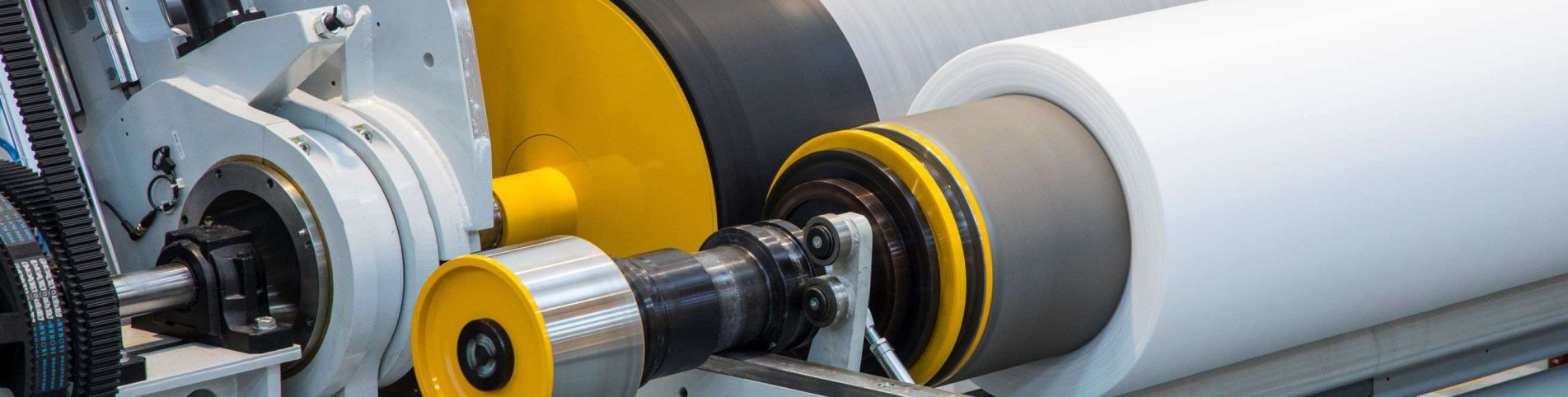
As global agriculture shifts toward more sustainable, efficient, and low-chemical-input farming practices, polypropylene (PP) spunbond nonwoven fabric has become a widely used material for crop protection, weed control, frost prevention, and greenhouse production. Manufactured from 100% virgin polypropylene resin via a one-step melt-spinning process, this material offers an excellent balance of breathability, thermal insulation, light transmission, and weather resistance. Compared to plastic films, straw mats, or traditional shade nets, it provides a significantly lower total lifecycle cost.
Xinhua Textile produces UV-stabilized agricultural spunbond nonwoven fabrics with basis weights ranging from 15 gsm to 100 gsm and widths of up to 240 cm. Our products are used extensively by farms, orchards, greenhouses, and agricultural supply distributors worldwide. This guide provides a comprehensive overview of agricultural nonwoven fabrics—covering key advantages, field applications, specification selection, and quality standards—to help you choose the most suitable material for your cultivation operations.
Key Advantages of PP Spunbond Nonwoven Fabric for Agriculture
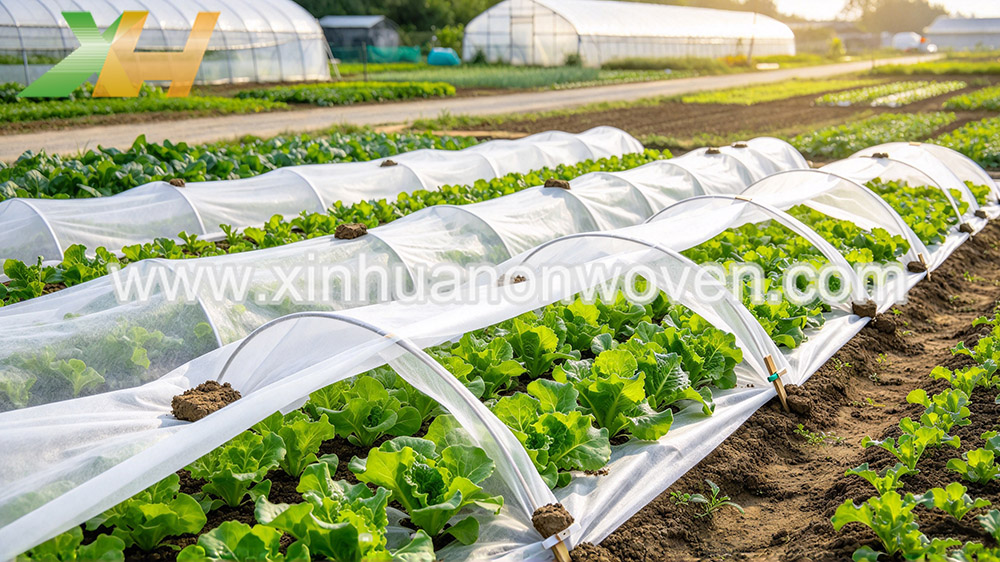
Unlike impermeable plastic mulch or natural fiber covers that are prone to decay, polypropylene spunbond nonwoven fabric is specifically engineered for outdoor agricultural environments, offering distinct benefits in terms of increased crop yields and reduced operational costs.
1. Frost Protection and Microclimate Regulation
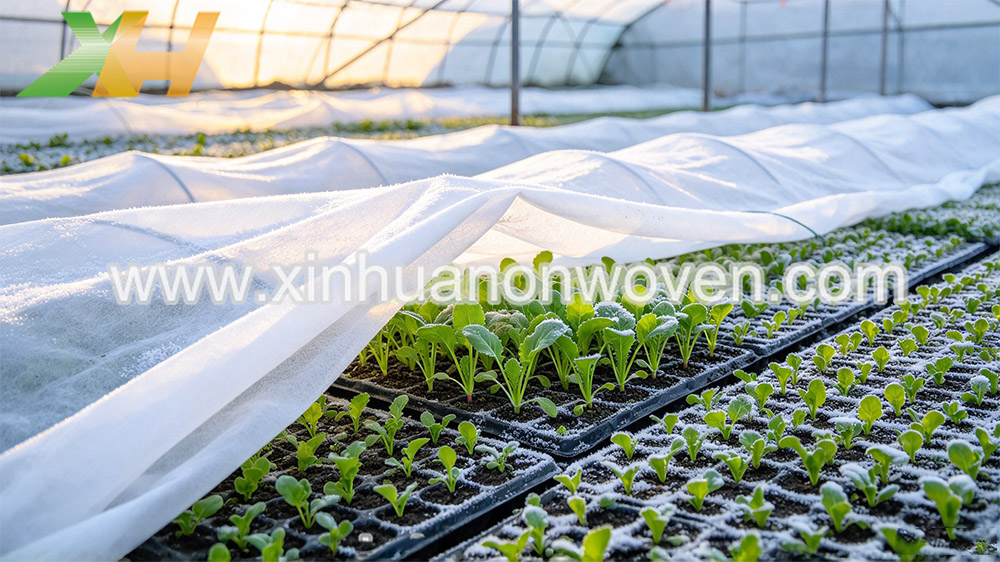
Lightweight white nonwoven covers can raise the temperature beneath them by 2–4°C relative to the ambient temperature, protecting seedlings and leafy greens from light to moderate frost (capable of withstanding temperatures as low as approximately -8°C). This allows growers to begin sowing 1–3 weeks earlier in the spring and extend the harvest season well into late autumn, effectively lengthening the crop growing period.
2. Natural Pest Barrier
With its uniform and dense fibrous structure, 15–25 gsm spunbond non-woven fabric acts as a physical barrier, effectively blocking most common flying insects, caterpillars, and small pests. In the cultivation of various vegetable crops, this can reduce pesticide usage by 60%–80%. At the same time, the material maintains excellent air permeability and allows rainwater and irrigation water to penetrate naturally, ensuring that plants receive adequate ventilation and moisture.
3. Chemical-Free Weed Suppression
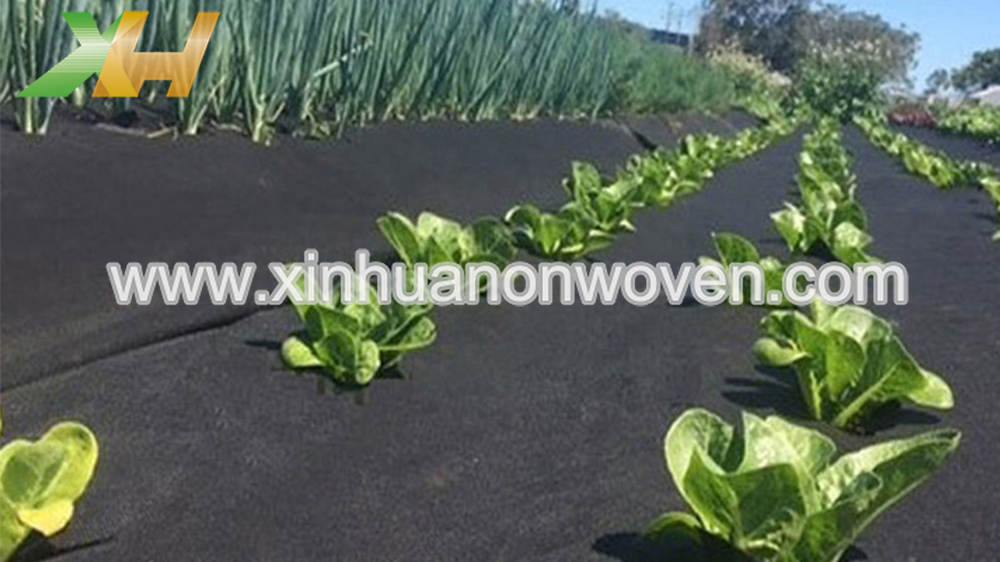
Black, UV-resistant non-woven weed control mats completely block sunlight, preventing weed germination and growth without the need for herbicides. This material helps retain soil moisture, reduces evaporation, and stabilizes soil temperature, while still allowing water and nutrients to reach the root zone.
4. UV Resistance and Long Outdoor Lifespan
High-quality agricultural non-woven fabrics are treated with UV stabilizers during production. This UV-resistant treatment extends their service life when exposed to outdoor conditions, making them ideal for use as multi-season ground covers or in orchards.
5. Labor and Cost Savings
Lightweight and easy to handle, these non-woven fabrics are simple to lay, cut, and secure in the field. Compared to manual weeding, clearing away plastic mulch films, or replacing traditional straw mats, they significantly reduce labor time and lower long-term input costs. Furthermore, the product is available in wide-width rolls, allowing for the rapid coverage of large areas.
6. Environmental Compliance
Made from polypropylene, agricultural non-woven fabrics do not leave behind microplastic residues in the soil—a common issue with thin polyethylene (PE) mulch films. At the end of their service life, they can be removed entirely and disposed of properly. This aligns with the increasingly stringent regulatory requirements for agricultural plastic waste in many markets.
Key Application Scenarios and Recommended Specifications
Different agricultural applications have specific requirements regarding material weight (gsm), color, and UV resistance levels. Below are several common uses and their corresponding recommended standard specifications.
| Application | Recommended GSM | Color | UV Stabilization | Typical Crops & Use Cases |
|---|---|---|---|---|
| Floating row cover / crop cover | 15–25 gsm | White | Recommended | Leafy greens, strawberries, seedlings, early spring planting |
| Frost protection cover | 17–30 gsm | White | Recommended | Vegetables, nursery beds, overnight frost defense |
| Insect barrier fabric | 15–25 gsm | White | Optional | Cabbage, carrots, melons, organic vegetable farms |
| Light weed control mulch | 50–70 gsm | Black | Essential | Vegetable rows, greenhouse pathways, nursery beds |
| Heavy weed mat / ground cover | 80–100 gsm | Black | Essential | Orchards, vineyards, landscaping, permanent walkways |
| Orchard & fruit tree cover | 30–70 gsm | White / Black | Essential | Fruit trees, grape vines, hail & sunburn protection |
| Greenhouse thermal screen | 30–50 gsm | White / Grey | Optional | Greenhouse inner insulation, shade adjustment |
| Fruit protection bags | 15–30 gsm | White / Tan | Optional | Mangoes, apples, pomegranates, pest & sun protection |
How to Choose the Right Agricultural Non-woven Fabric
Selecting the wrong weight or material composition can lead to premature product degradation, poor crop performance, or unnecessary costs. Please consider the following four factors before placing an order.
1. GSM (Weight)
- Lightweight (15–30 gsm): Best suited for short-term crop covering, frost protection, and pest control. Offers high light transmission (70%–85%) and excellent breathability at a low cost per unit area. Not intended for long-term ground coverage.
- Medium-weight (30–60 gsm): Suitable for greenhouse shading/curtains, nursery protection, covering fruit trees, and light weed suppression. Provides a balance between strength, light transmission, and durability.
- Heavy-weight (60–100 gsm): Designed for multi-season weed suppression, orchard ground cover, and long-term landscaping applications. Features high tensile strength, superior UV resistance, and a long service life.
2. Color
- White: Reflects heat and transmits diffused light. Ideal for crop covering, frost protection, and growing environments that require high light levels.
- Black: Absorbs heat and blocks 100% of light. The standard choice for weed-suppression ground covers and long-term soil coverage.
- Green: Used for landscaping and ornamental purposes, where visual appearance is a priority.
3. UV Resistance (UV Stabilization)
UV-resistant treatment is essential for any outdoor use exceeding 3 months. UV-stabilizing additives are typically incorporated at concentrations ranging from 1% to 4%, depending on the intended service life. For regions with intense sunlight or for multi-year applications, products with a higher concentration of UV-stabilizing additives are recommended.
4. Roll Width
Standard widths for agricultural rolls include 1.6 m, 2.0 m, and 2.4 m. Custom widths are also available to accommodate specific row spacing, seedbed dimensions, or greenhouse specifications. Wider rolls reduce the number of seams and accelerate the installation process in the field.
Quality Standards for Reliable Agricultural Non-Woven Fabrics
Field performance depends significantly on the quality of the material. The following are key indicators for evaluating the reliability of agricultural nonwoven products:
1. Virgin Polypropylene (PP) Resin Base — Products made from recycled materials or those containing fillers tend to degrade more rapidly, exhibit inconsistent strength, and offer uneven UV resistance. In contrast, products manufactured using virgin polypropylene provide predictable durability and a uniform fabric structure.
2. Uniform Fiber Web Structure — An even distribution of fibers ensures consistent light transmission, water permeability, and strength across the entire width of the material roll.
3. Stable UV-Resistant Formulation — UV stabilizers must be homogeneously blended into the resin matrix—rather than merely applied as a surface coating—to ensure sustained protection throughout the material's entire service life.
4. Tensile and Tear Strength — High strength in both the machine direction (MD) and cross direction (CD) prevents the material from tearing during installation, exposure to wind, or handling in the field.
5. Batch-to-Batch Consistency — Uniformity in basis weight (grammage), color, and UV resistance ensures consistent and predictable product performance, whether for repeat orders or use across different growing seasons.
At Xinhua Textile, all our agricultural nonwovens are produced using high-quality virgin polypropylene (PP) resin. Our manufacturing process incorporates in-line basis weight monitoring and proven UV-resistant formulations. Furthermore, we have implemented a comprehensive traceability system that tracks products from raw materials through to the finished rolls.
Xinhua Textile: Customized Agricultural Nonwoven Solutions
As a direct manufacturer of spunbond nonwovens with extensive experience in agricultural exports, Xinhua Textile is dedicated to providing tailored material solutions for farms and agricultural distributors worldwide. Our products and services for agricultural clients include:
- Comprehensive basis weight range: 15gsm – 100gsm
- Maximum width: 240cm (custom slitting available)
- UV resistance levels: 1%, 2%, 3%, and 4% (selectable based on local climatic conditions and expected service life)
- Standard colors: White, black, and green; custom Pantone color matching available
- Customizable roll lengths and packaging options tailored for agricultural supply distribution
- Consistent batch quality, ensuring uniformity for recurring seasonal orders
- Full suite of export documentation and flexible shipping terms
We also offer specialized customization services, including edge reinforcement, custom printing, hydrophilic treatment, and multi-panel seamed rolls for extra-wide field applications.
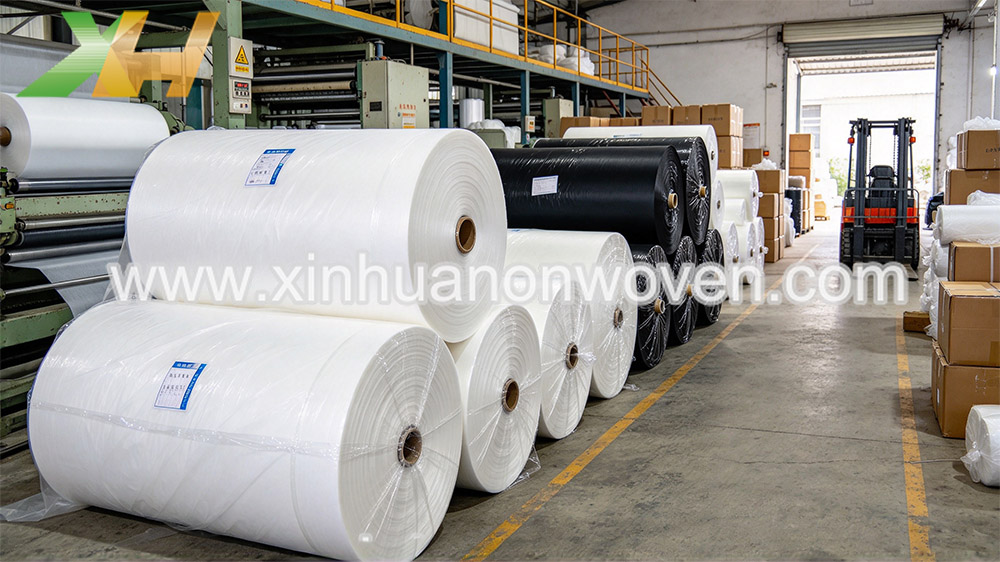
Request Samples and Factory-Direct Quotes
Whether you require lightweight crop covers for vegetable cultivation, heavy-duty weed control fabric for orchards, or custom nonwovens for greenhouses, we can provide product samples, technical specifications, and highly competitive factory-direct pricing.
If you are sourcing agricultural nonwovens for a farm, nursery, or distribution business, please share your requirements with us—including the specific application, target basis weight (GSM), order quantity, and delivery timeline. Our technical sales team will recommend the optimal specifications and provide a detailed quotation. We look forward to supporting your growing business with reliable, field-proven polypropylene (PP) spunbond nonwoven fabrics.
Please Read On, Stay Posted, Subscribe, And We Welcome You To Tell Us What You Think.
Copyright @ 2026 Xinhua Textile Co., Limited All Rights Reserved. Network Supported
Hi! Click one of our members below to chat on
 English
 Français
 Deutsch
 Русский
 Italiano
 Español
 Português
 عربي
 Indonesia
 עִברִית